Yakushi temples in Japan: Nara, Kyoto, Mount Hiei
From the temple founded to heal an empress to a flame said to have burned for twelve hundred years.
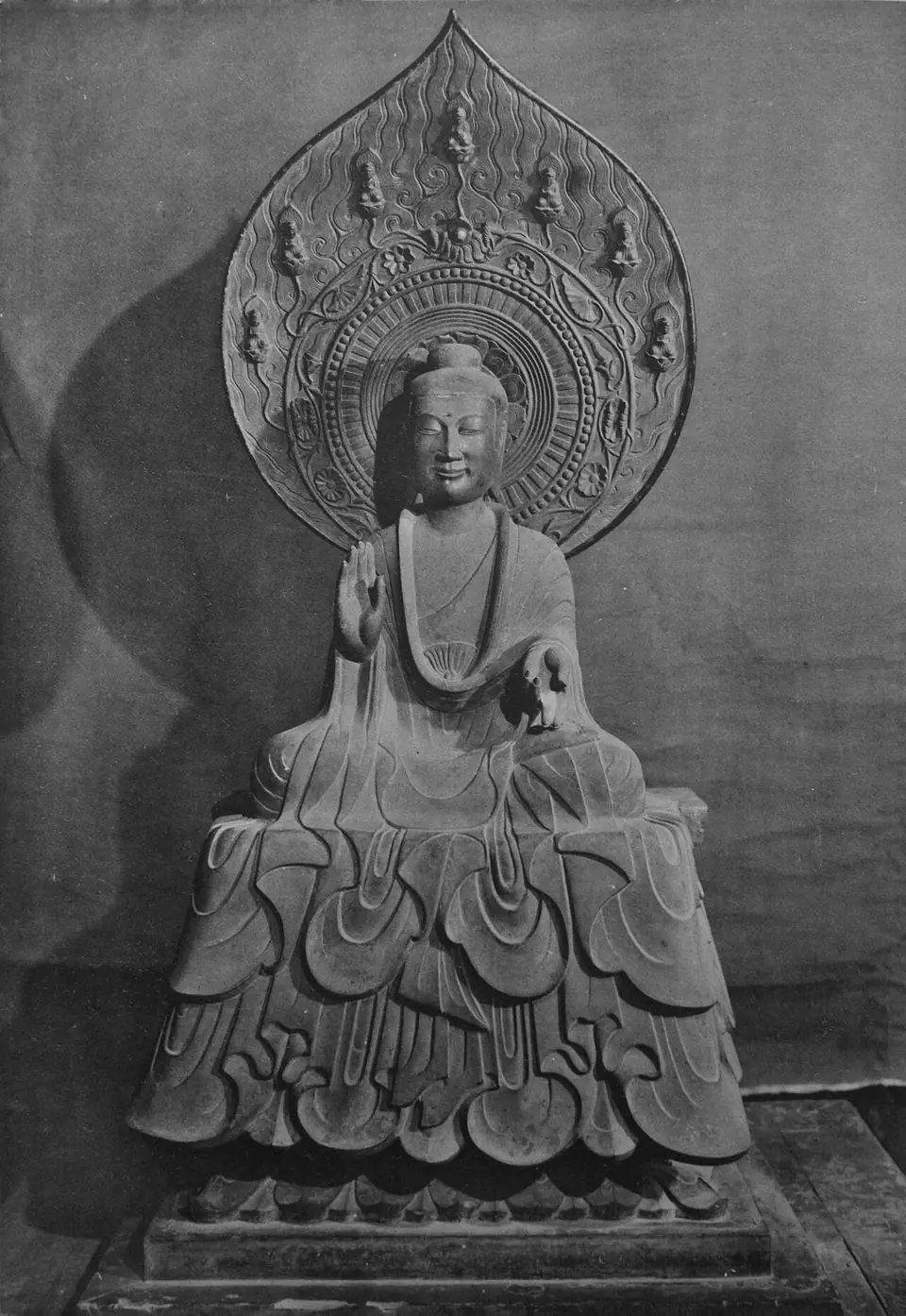
Japan has thousands of temples where Yakushi Nyorai is the main figure. Here are a few famous places; always check the official website before a visit. The full story of the oldest of them is in the article on Yakushi-ji. If you are planning a trip, let this list be your starting point.
In Nara
- Yakushi-ji: founded according to tradition by Emperor Tenmu in 680, after his wife’s illness. Its golden hall (Kondō) holds a bronze triad, Yakushi flanked by Nikkō and Gakkō, a national treasure. The East Pagoda, from 730, is the only original building still standing.
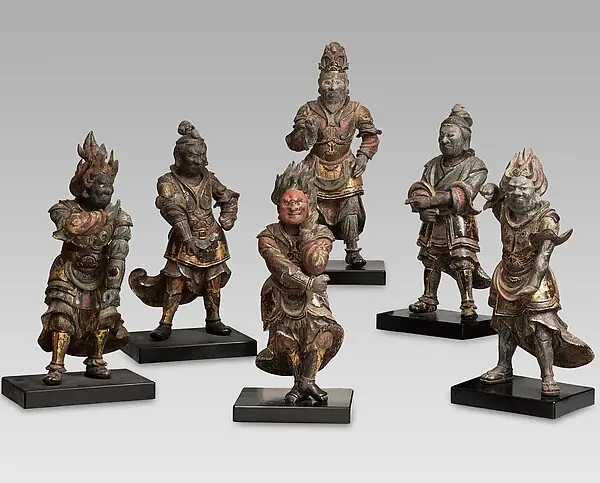
- Shin-Yakushi-ji: founded in the 8th century. Around a seated wooden Yakushi stand the twelve heavenly generals in clay, also national treasures.
In Kyoto and around
- Jingo-ji: a standing Yakushi of the Heian period, a national treasure.
- Tō-ji: the Kondō holds a large Yakushi triad.
- Enryaku-ji, on Mount Hiei: the Konponchūdō, founded by Saichō, holds a Yakushi presented as a hidden image. A lamp is said, by tradition, to have burned there without interruption since the temple’s foundation.
At Ikaruga
Hōryū-ji keeps a statue of Yakushi in its golden hall. Its inscription says it dates from the year 607, by the will of Empress Suiko and Prince Shōtoku, but many historians think the inscription was written later, toward the end of the 7th century. The temple is a UNESCO[11] World Heritage Site.
The 49-temple pilgrimage
Created in 1989, the pilgrimage of the 49 Yakushi temples of Western Japan (Saigoku) links temples in seven prefectures, including Nara, Kyoto and Osaka. Pilgrims often collect calligraphed seals (goshuin) in a book.
Yakushi statues listed as National Treasures
Japan has thousands of Yakushi statues. Among them, the following are listed as National Treasures (list based on the Agency for Cultural Affairs database and the Japanese encyclopedia):
- Shōjō-ji (Fukushima): triad, the seated Yakushi at the centre, early Heian period.
- Ninna-ji (Kyoto, former Kita-in): seated Yakushi, Heian period.
- Jingo-ji (Kyoto): standing Yakushi, early Heian period.
- Daigo-ji (Kyoto), Yakushi hall of Kami-Daigo: triad, early Heian period.
- Shishikutsu-ji (Osaka): seated Yakushi, early Heian period.
- Hōryū-ji (Nara), Kondō: seated Yakushi, late Asuka or early Nara period.
- Hōryū-ji (Nara), Great Lecture Hall: triad, mid-Heian period.
- Tōshōdai-ji (Nara), Kondō: standing Yakushi, late Nara to early Heian.
- Yakushi-ji (Nara), Kondō: bronze triad, Nara period.
- Shin-Yakushi-ji (Nara): seated Yakushi, early Heian period; see the article on Shin-Yakushi-ji.
- Nara National Museum: seated Yakushi, early Heian period.
- Gangō-ji (Nara): standing Yakushi, early Heian period.
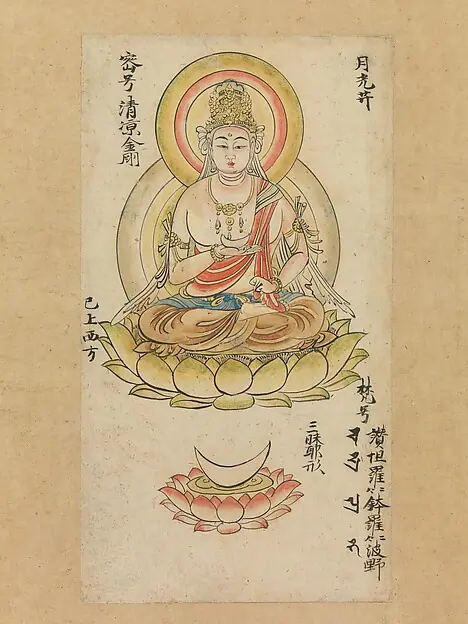
Dates follow the official records; several are still debated. Many of these statues can only be seen at certain times, or remain hidden images: always check before you go.
Other places to know
- Kōfuku-ji (Nara): the famous bronze Buddha head, a National Treasure, belonged to the Yakushi triad of Yamada-dera, consecrated at the end of the 7th century.
- Tō-ji (Kyoto): the great triad of the Kondō, carved in the early 17th century, is an Important Cultural Property.
- The provincial temples (kokubun-ji), founded in the 8th century in each province: most now have Yakushi as their main figure.
Hidden images and openings
In many temples, the Yakushi statue is a hidden image (hibutsu), kept in a closed shrine. It is shown only on fixed dates, sometimes once every thirty-three years. Opening dates are announced by the temples themselves. This is the case, for example, of the main image of the Konponchūdō on Mount Hiei.
The 8th of each month
Yakushi’s festival day (ennichi) is traditionally the 8th of each month; some temples keep the 12th, in reference to the twelve vows, as Yakushi-ji explains. At Yakushi-ji, the 8th is the day of a monthly ceremony where the great Wisdom sūtra is read by turning its pages. Each year from 25 to 31 March the temple also holds the Shunie Hanae-shiki, a ceremony of repentance before the Medicine Buddha, decorated with artificial flowers.
Copying a sūtra at Yakushi-ji
Yakushi-ji is nicknamed “the temple of sūtra copying”. Since 1968, copies made by visitors (shakyō), with an offering, have funded the rebuilding of the Golden Hall, the West Pagoda and the Great Lecture Hall. The temple offers this copying all year round, on site, with guidance. Conditions are on the temple’s official website.
The pilgrimage in practice
The pilgrimage of the 49 Yakushi temples of Western Japan has its own website. It lists the temples, the suggested order and the dates of special openings. There is no need to follow the order; many pilgrims complete it over several trips. Seal books (goshuin) are sold at the temples.
Yakushi-ji, a temple rebuilt
Yakushi-ji was first built in the Fujiwara capital, then moved to the new capital of Heijō-kyō (Nara) in 718. Wars and fires destroyed most of its buildings: in 1528 the Golden Hall and the West Pagoda were lost. The East Pagoda survived. The Golden Hall was rebuilt in 1976, the West Pagoda in 1981 and the Great Lecture Hall in 2003, largely funded by sūtra copying. The East Pagoda went through a long restoration between 2009 and 2020. The temple and its neighbours belong to the UNESCO[11] site of the Historic Monuments of Ancient Nara.
Yakushi in the Shingon and Tendai schools
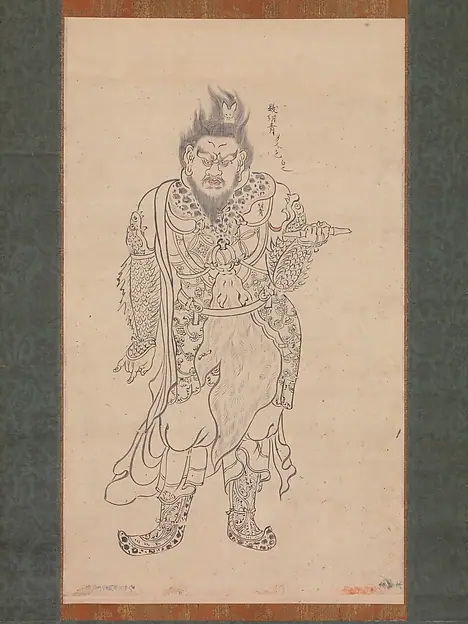
Yakushi does not appear in the two great mandalas of the Shingon school. Yet he is the main image of the Golden Hall of Tō-ji and of the Yakushi hall of Kami-Daigo at Daigo-ji, and many Shingon temples honour him as a Buddha who protects the country. Because he is the Buddha of the east, he is also identified with Akṣobhya, as in the Golden Hall of the Danjō Garan on Mount Kōya. In the Tendai school, which had close ties with the court, Yakushi was linked with the emperor of Japan, the “land of the east”. Tendai esotericism also developed a ritual of the seven Medicine Buddhas.
Visiting with respect
- Photography is often forbidden inside halls: follow the signs.
- During a service, stay quiet at the back, or wait outside.
- Shoes are removed in many halls; socks are useful.
- Seals (goshuin) are written at set hours, at a dedicated desk.
- Hidden images are shown only on announced dates; outside those dates, the closed shrine itself is what visitors see.
- An entry fee or an offering supports the upkeep of the buildings.
Five statues, five stories
- Hōryū-ji, Golden Hall: the inscription on the halo says that Emperor Yōmei, when he fell ill, vowed to build a temple and a statue of Yakushi, and that Empress Suiko and Prince Shōtoku completed the work in 607 after his death. The style and the wording of the inscription lead many historians to a later date.
- Shin-Yakushi-ji: according to tradition, Empress Kōmyō founded the temple in 747, praying for the recovery of Emperor Shōmu. The main hall is a building of the Nara period. Of the twelve clay generals, eleven are from the Nara period; one was remade in the 20th century.
- Enryaku-ji, Konponchūdō: the hall goes back to the small temple founded by Saichō on Mount Hiei in 788. After Oda Nobunaga burned Mount Hiei in 1571, the present building was rebuilt in 1642 by the shōgun Tokugawa Iemitsu. The hidden standing Yakushi, said by tradition to be carved by Saichō, was last shown in 1988. The “inextinguishable lamp” was interrupted by the fire of 1571, then relit from a flame kept at Risshaku-ji, in Yamagata.
- Tō-ji, Golden Hall: the hall was rebuilt in 1603 at the request of Toyotomi Hideyori. The Yakushi triad inside is the work of the sculptor Kōshō; the twelve generals are carved around the base of the main statue.
- Tōshōdai-ji, Golden Hall: the standing Yakushi stands to the right of the great Rushana Buddha, as seen by visitors. It is made of a wooden core covered with dry lacquer, a technique typical of the late Nara period.
Timeline
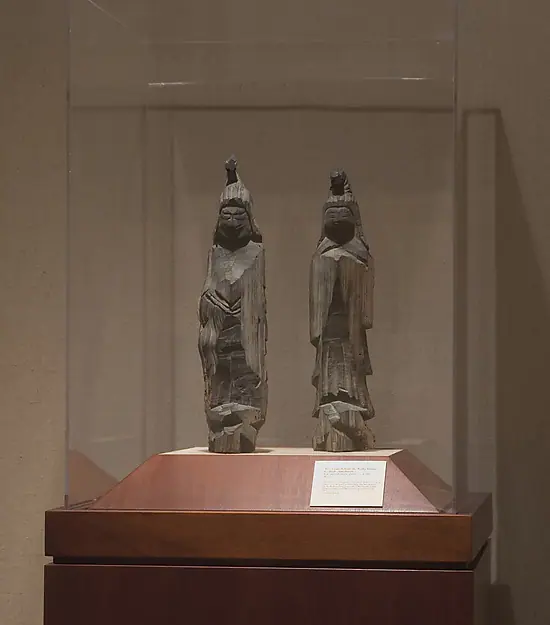
- 607: completion of the Hōryū-ji Yakushi according to the inscription on its halo (the date is debated).
- 680: according to the chronicles, Emperor Tenmu vows to found Yakushi-ji for the recovery of the empress, later Empress Jitō.
- 718: Yakushi-ji moves to the new capital, Heijō-kyō (Nara).
- 747: traditional founding of Shin-Yakushi-ji by Empress Kōmyō.
- 788: Saichō builds a small hall on Mount Hiei, the origin of the Konpon Chūdō.
- 1528: fire destroys the Golden Hall and West Pagoda of Yakushi-ji; the East Pagoda survives.
- 1571: Oda Nobunaga burns Mount Hiei.
- 1603: the Golden Hall of Tō-ji is rebuilt.
- 1642: the present Konpon Chūdō is rebuilt.
- 1968: Yakushi-ji begins its sutra-copying campaign.
- 1976, 1981, 2003: Yakushi-ji rebuilds its Golden Hall, West Pagoda and Great Lecture Hall.
- 1998: the “Historic Monuments of Ancient Nara” are inscribed on the UNESCO[11] World Heritage List; Hōryū-ji had been inscribed in 1993.
- 2009–2020: full restoration of the East Pagoda of Yakushi-ji.
A day in Nara around Yakushi
Yakushi-ji and Tōshōdai-ji are neighbours: both are near Nishinokyō station (Kintetsu Kashihara line), about ten minutes’ walk from each other. In a single morning you can see the bronze triad of Yakushi-ji and the standing dry-lacquer Yakushi of Tōshōdai-ji. Hōryū-ji, further south-west, is reached from JR Hōryūji station, then by bus or on foot; its Golden Hall Yakushi is one of the oldest in the country. Shin-Yakushi-ji lies on the east side of the city, at the foot of the hills, reached by bus from the Nara stations and then on foot. The Nara National Museum, in the park, holds an early Heian seated Yakushi and often shows works lent by temples. Opening hours change with the season and some halls close for repairs: check the official websites before you go.
What you see, and what you do not
Many visitors are surprised not to see the main image. There are three cases. The image may be on permanent view, as at Yakushi-ji. It may be hidden (hibutsu) and shown only at announced openings, sometimes once in a generation. Or it may be on loan or under restoration, with a photograph or a copy standing in for a while. In every case the temple remains a place of worship: people come first to pray, and the art comes second.
Preparing your visit
Official links are in Services. To take a souvenir home, see the Japanese statues in the catalogue and the goshuin books.
Sources
- Agency for Cultural Affairs, cultural properties database
- Japanese Wikipedia, 薬師如来 (list of National Treasures)
- Yakushi-ji, official website
- Yakushi-ji, ceremony videos
- Pilgrimage of the 49 Yakushi temples of Western Japan
- Shin-Yakushi-ji, official website
- Tō-ji, official website
- Daigo-ji, official website
- Ninna-ji, official website
- Tōshōdai-ji, official website
- UNESCO, Buddhist Monuments in the Hōryū-ji Area
- UNESCO, Historic Monuments of Ancient Nara
In the catalogue : Statues
Lapis is free and has no advertising. You can support its upkeep.